

Modern · Design-forward
Microcement Overlay Systems in Houston.
Hand-troweled, 2–3mm cementitious overlay over concrete, tile, or other stable substrates. Seamless, monolithic finish with no grout lines. Floors, walls, counters, showers, staircases. 15-year installation warranty.
- 5.0 across every Google review
- 15-year installation warranty
- 2–3mm thickness
- Dual epoxy + microcement expertise
- Houston-owned
The short answer
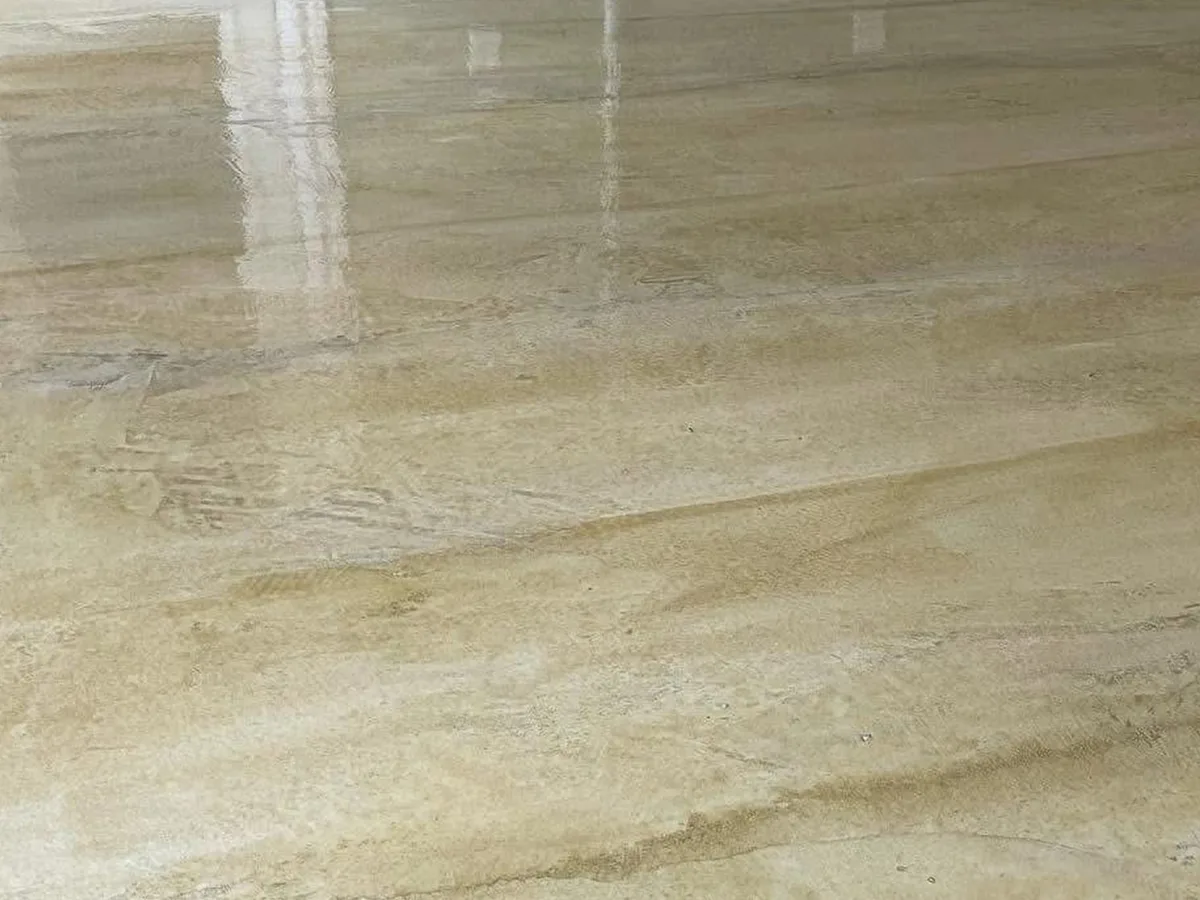
Microcement is a thin, seamless cementitious overlay: 2–3mm thick, hand-troweled, applied over concrete, tile, or other stable substrates. It’s not epoxy. Different material, different method, different result: a monolithic surface with no grout lines, no seams, no joints, in a design-forward finish that ranges from raw industrial to refined and polished. Most Houston coating companies don’t offer microcement because it requires a completely different skill set. We do.
01 · Why microcement
Why Houston property owners choose microcement.
- Ultra-thin application over existing surfaces. At 2–3mm thick, microcement adds virtually no height to the floor. Applied directly over concrete, tile, or other stable substrates without demolition or changes to door clearances.
- Seamless, monolithic surface. No grout lines. No seams. No joints. Continuous surface that looks clean, feels expansive, and eliminates the dirt traps and maintenance headaches of tiled floors.
- Applies to more than floors. Floors, walls, countertops, showers, staircases, even furniture. Carry a single material and aesthetic across multiple surfaces, a cohesive interior upgrade that Houston homeowners increasingly seek when refreshing high-value spaces.
- Wide color + texture palette. Warm earth tones to cool grays, smooth and refined to textured and industrial. Final appearance shaped by color selection AND troweling technique. Every install is unique.
- Compatible with radiant heating. Thin profile + direct bond to substrate transmits heat efficiently without adding insulating thickness. Effective over in-floor heating systems.
02 · How we install it
Our 5-step microcement process.
Microcement is hand-troweled in thin passes. Each layer must cure before the next is applied. Quality depends directly on installer skill and timing, not a roll-on coating.
Surface eval + prep
Substrate (concrete, tile, other) must be clean, stable, structurally sound. Prep is different from epoxy: stable adhesion base, not mechanical grind profile.
Primer application
Bonding primer selected to substrate (concrete, tile, drywall each need a different approach). Must cure fully before base coat.
Base coat
Hand-troweled in thin even layers. Builds the foundation, fills minor imperfections, establishes texture. One or two passes with cure time between.
Finish coat
Determines final color, texture, and visual character. Hand-troweled with controlled pressure and technique. The installer’s hand directly shapes the surface, not a process that can be rushed or mechanized.
Sealer
Protective sealer against moisture, staining, and wear. Sealer type selected per application: shower floor vs. living room needs different products.
03 · Why it’s rare
Why most Houston coating companies don’t offer microcement.
If you’ve searched for microcement in Houston, you’ve probably noticed most floor coating companies don’t list it. There’s a straightforward reason.
Epoxy and microcement require completely different skill sets. Epoxy is mixed and rolled/squeegeed onto a mechanically prepared slab. Most Houston coating companies specialize in epoxy and stain systems: similar methods, tools, and materials across their service lineup.
Microcement is a different discipline. Hand-troweled cementitious layers, where finished-surface quality depends on the installer’s technique with a trowel: how much material, at what angle, with what pressure, and at what cure stage. The work is closer to decorative plaster than to floor coating.
Our install crews include specialists trained in both epoxy coating systems and microcement overlay application. That dual capability is rare in the Houston market. It means we can recommend the system that actually fits your space (epoxy where durability is the priority, microcement where design and seamless aesthetics are the goal) without being limited to one product.
Epoxy
Resinous chemistry. Rolled/squeegeed. Mechanical grind prep. Better for chemical resistance, impact, commercial/industrial use.
Microcement
Cementitious. Hand-troweled. Chemical bond primer prep. Better for residential design, multi-surface cohesion, modern aesthetic.
We do both.
Recommend based on what the space needs, not what we happen to install. Genuinely rare in the Houston market.
04 · Warranty
Backed by a 15-year installation warranty.
Every microcement overlay we install is backed by our 15-year installation warranty. We stand behind our craftsmanship because we control the process from surface prep through final sealer application.
Standard exclusions: misuse, impact, abrasion beyond normal wear, hydrostatic pressure, moisture vapor transmission, alterations by others. Periodic resealing expected to maintain protection over time. Full warranty terms.
05 · FAQ
Microcement questions.
What is microcement?
A thin cementitious coating (2–3mm) applied over existing surfaces to create a seamless modern finish. Not epoxy: different material, different application, different performance. Smooth continuous surface with subtle tonal variation that gives it a handcrafted architectural quality.
Where can microcement be applied?
Floors, walls, countertops, showers, staircases, and furniture. Primarily an interior system. Bonds to concrete, tile, drywall, and most other stable substrates. Versatile enough to cover multiple surfaces in a single space with one cohesive material.
How durable is microcement compared to epoxy?
Different strengths. Microcement is highly durable for interior foot traffic, residential use, and commercial spaces like restaurants and retail. Epoxy is better for garages, warehouses, and spaces with heavy equipment, chemicals, or extreme mechanical wear. Because we install both, we recommend based on how the space will actually be used.
How do you maintain microcement floors?
Simple. Sweep or vacuum regularly. Damp mop with pH-neutral cleaner as needed. Avoid abrasive cleaners and scouring pads. Sealer should be reapplied periodically based on traffic. We provide specific maintenance guidance per install.
Can microcement be applied over existing tile?
Yes in most cases. Tile must be stable, well-bonded, and free of loose or cracked sections. Microcement bonds to tile when properly primed: a completely new look without tile demolition. We evaluate existing tile condition first; failing tile needs to be addressed before overlay.
Related services
Full service menu.
Ready to transform your space with microcement?
Microcement delivers a look no other coating system can replicate: seamless, modern, and handcrafted. Call to discuss your project. We’ll evaluate the space, explain whether microcement is the right fit, and provide a clear scope and estimate.
Service area