

Epoxy Paint vs. 2-Part Epoxy Garage Floor Coatings: The Real Difference
There are two different types of products people call “epoxy,” and that’s where most of the confusion starts.
If you’ve ever walked down the aisle at Home Depot and seen “epoxy” on a box… then talked to a contractor who installs a “2-part epoxy / polyaspartic system”… you’ve probably wondered:
Are we talking about the same product… or is “epoxy paint” just marketing?
Here’s the real answer:
✅ Epoxy paint is generally a paint-like coating (often acrylic or latex) with a small percentage of epoxy added for adhesion. It goes on thin and dries like paint.
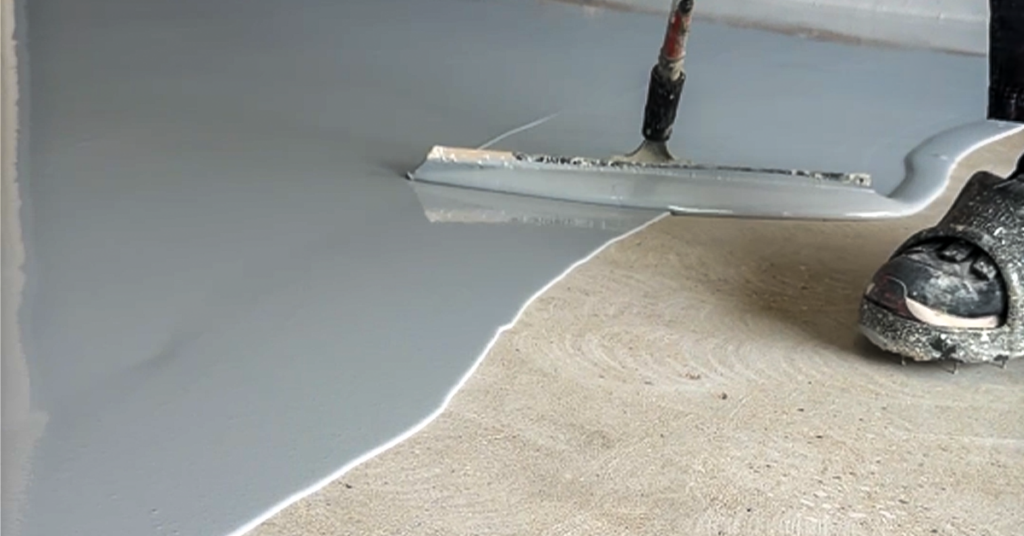
✅ A 2-part epoxy garage floor coating is a true chemical-curing resin system (Part A resin + Part B hardener). It cures into a thicker film that bonds to concrete and can withstand hot tires, abrasion, and chemicals — if it’s installed properly.
They’re not the same product — and the difference shows up fast in a garage.
What People Typically Mean by “Epoxy Paint”
When homeowners say “epoxy paint,” they’re usually referring to one of these:
1) 1-Part “Epoxy” Floor Paint
This gets called “epoxy” because it’s tougher than standard paint, but it’s still essentially a single-component coating that dries (evaporation) rather than chemically cures.
Good for:
- Light-duty areas (utility room, storage, low traffic)
- Quick cosmetic upgrade
- Budget projects where longevity isn’t a priority
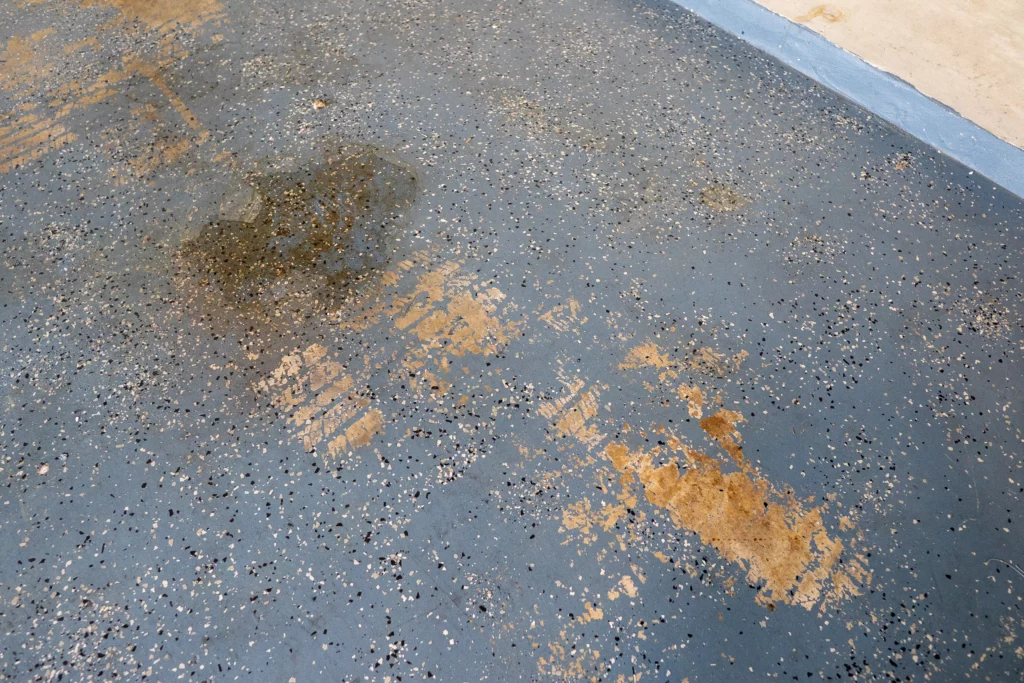
Fails in garages because:
- Hot tire pickup (peels where tires park)
- Weak chemical resistance (oil, brake fluid, cleaners)
- Thin film = wears through faster
- Moisture issues can cause bubbling or flaking
2) DIY “Epoxy” Kits (Big Box Stores)
Most DIY kits aren’t the same as professional garage systems — even when they’re labeled “2-part.”
While some DIY kits are true 2-part epoxies, many times:
- They’re water-based or lower-solids (easier to apply, more forgiving)
- They have a thin build and lower performance
- Their recommended prep methods are over-simplified (and often ignored)
So your intuition is right: people call it “epoxy paint” because many DIY kits and floor paints perform similarly in real garages.
What a True 2-Part Epoxy Garage Floor Coating Really Is
A professional epoxy base coat is a thermosetting polymer system made from:
- Part A: Epoxy resin
- Part B: Hardener / curing agent
When mixed, it undergoes a chemical reaction and forms a durable film.
That chemical reaction is the difference.
What it’s meant to withstand:
- Hot tires and plasticizers (a major reason DIY floors peel)
- Foot traffic and tool abrasion
- Better adhesion to properly prepared concrete
- Chemical and stain resistance
Key phrase: properly prepared concrete.
A great epoxy installed over a poorly prepped slab will still fail.
The Simple Comparison: Drying vs. Chemical Cure
This is the simplest way to explain it to clients:
- Epoxy paint mostly dries (like paint).
- 2-part epoxy cures (chemical reaction).
That cure creates a tighter, harder, more strongly bonded film — if the concrete is mechanically prepared.
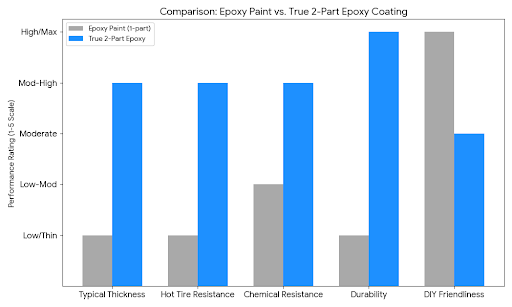
Epoxy Paint vs. 2-Part Epoxy Coating Comparison Table
| Feature | Epoxy “Paint” (1-part / paint-like) | True 2-Part Epoxy Floor Coating |
|---|---|---|
| Curing method | Dries (evaporation) | Chemical cure (resin + hardener) |
| Typical thickness | Thin film | Thicker build potential |
| Hot tire resistance | Low | Higher (with proper prep + topcoat) |
| Chemical resistance | Low–moderate | Moderate–high |
| Garage flooring durability | Low | High (system dependent) |
| DIY friendliness | Very easy | Moderate (prep + timing matter) |
| Common failures | Peeling / flaking / early wear-through | Peeling is usually prep/moisture-related (not “epoxy is bad”) |
Why DIY Garage Floors Peel (Even When the Box Says “Epoxy”)
1) Concrete Prep Is the Entire Process
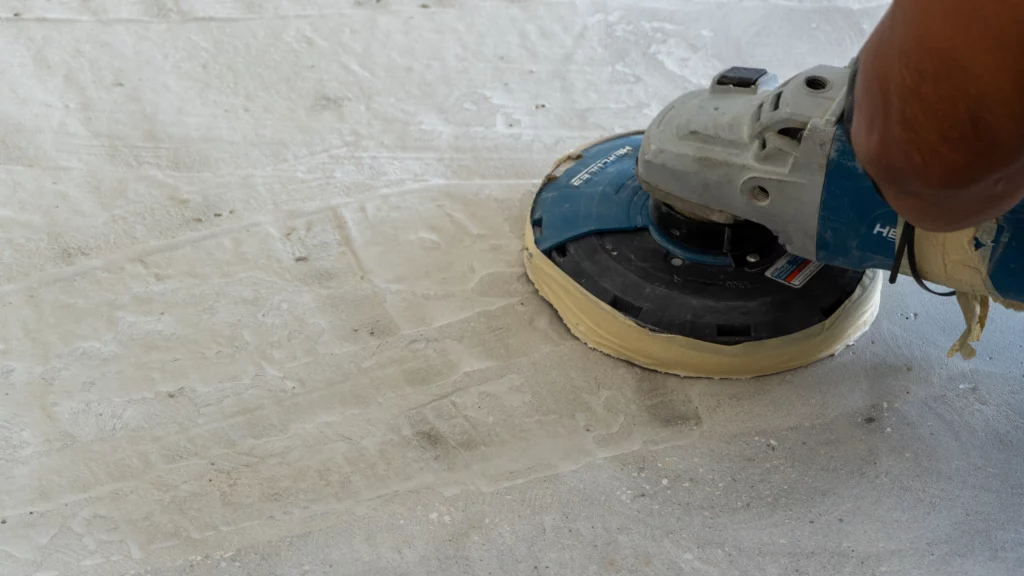
Concrete needs a mechanical profile to bond to — like sanding wood before staining.
Many DIY jobs:
- Skip grinding completely
- Use acid etch (often inconsistent)
- Don’t remove contaminants deeply enough (oil, tire residue, old sealers)
If the coating bonds to dust, oil, or a sealed surface… it’s going to peel.
2) Moisture Vapor Transmission (MVT)
Concrete “breathes.” Moisture rising through the slab can push coatings off like a blister.
A professional system may include:
- Moisture testing
- Moisture-mitigation primer (when needed)
DIY kits rarely address this correctly.
3) The Film Build Is Too Thin
Even if a DIY kit sticks, a thin coating wears through faster — especially under tires, turns, and heat.
4) There’s No Protective Topcoat (or the Wrong One)
A lot of “epoxy floors” fail because:
- There’s no protective topcoat
- The topcoat isn’t UV stable
- The topcoat isn’t abrasion-resistant
A garage floor that lasts is usually a system:
Prep → Epoxy base → Broadcast (optional) → Polyaspartic/Polyurethane topcoat
So… Is “Epoxy Paint” Basically the Same as a DIY Kit?
In performance? Often yes.
Even when a DIY kit is technically “2-part,” many perform like “epoxy paint” in real garages because:
- Simplified prep
- Lower solids
- Thinner build
- Minimal protection from the topcoat (or none at all)
That’s why you hear the same complaints:
- Peeling near tires
- Patchy wear patterns
- Stains
- Loss of shine within months
Decision Guide to Help You Choose Fast
Choose Epoxy Paint If:
- You want a cheap cosmetic update
- The space is low traffic
- You’re fine redoing it sooner
Choose a True 2-Part Epoxy System If:
- You park cars in the garage (especially daily)
- You want flakes, metallics, or a showroom look
- You need chemical resistance and easy cleaning
- You want it to last for years, not months
The “Pro Results” Formula: What Actually Lasts in a Garage
If you want to set expectations and separate yourself from DIY/low-cost installs, this is the formula:
- Mechanically grind the concrete (diamond grind) to clean the surface, open pores, and create a profile
- Repair cracks and joints (right materials, right technique)
- Apply a 2-part epoxy base coat (proper solids, correct mixing ratio)
- Optional: Full flake broadcast (texture, durability, traction control)
- Apply polyaspartic or polyurethane topcoat (abrasion + UV + stain resistance)
- Optional: Anti-slip additive (if water/pets/kids are present)
That’s how you avoid the most common complaint in this industry:
“It looked great for a month… then it started peeling.”
“Epoxy” Is a Classification — Not a Promise of Durability
This clears up most confusion in one shot:
“Epoxy” doesn’t automatically mean durable.
It simply describes the chemistry.
Durability depends on:
- Surface prep
- Product solids and intended use
- Thickness/build
- Topcoat choice
- Environmental conditions (moisture, temperature, UV)
- Installer knowledge and timing